

Educational Monsoon Adventure – Kathmandu, Pokhara & Australian Camp with 68 Students and Teachers
Travel means going from one place to another, usually away from home, for fun, learning, adventure, as a school trip, or for other purposes.
According to Mathieson and Wall, “Travel refers to the temporary movement of people to destinations outside their normal place of work and residence, the activities undertaken during their stay, and the facilities created to cater to their needs.”
The journey began early in the morning at the school premises with important notes, introductions, and briefings for both students and teachers by the guide from Jatra Travels, all amidst a buzz of excitement. Soon after, we boarded our private tourist buses at 8 a.m., singing, laughing, and ready to embrace whatever the rain gods had in store for us. Along the way, the monsoon had painted the entire landscape green, as if the world itself had been refreshed and colored anew. The hills, valleys, and even the roadside waterfalls looked fresh and alive.
On the way, we stopped at different places for refreshments. After reaching Malekhu, we enjoyed a buffet lunch featuring the famous Malekhu fish. About one-third of the students were vegetarians, so they were provided with freshly prepared vegetarian dishes. The lunch was delicious, filled with organic flavors that left everyone satisfied and energized for the journey ahead.
We reached Pokhara (205 km from Kathmandu) at around 4:00 p.m., where the hotel Temple Himalaya welcomed us with refreshing organic juice and cool wet towels. After check-in, we went to our rooms to freshen up and rest. Some students immediately dived into the swimming pool, enjoying the water to the fullest, especially since the weather in Pokhara was warmer compared to Kathmandu.
After some relaxation, the group was divided into five teams, and we set out to explore Lakeside and its beautiful surroundings. Following the exploration, we returned to the hotel, where a delicious buffet dinner awaited us. The students thoroughly enjoyed the meal, ending the day on a delightful note.
On the second day, we woke up early to the sound of rain, which felt calm and peaceful. Afterward, we enjoyed a delicious breakfast with a variety of healthy dishes. Fortunately, the rain stopped just in time, and at 10:00 a.m. we left the hotel for Pumdikot, located 10–12 km from Pokhara.
Pumdikot sits at an altitude of about 1,500 meters above sea level, offering a wonderful panoramic view of Pokhara city and Phewa Lake. At the top of the hill stands the grand 108-foot-tall statue of Lord Shiva, surrounded by 108 Shiva Lingas. Within the complex, we also saw a huge Damaru. Just a five-minute walk from the main temple, on the opposite side, stand the statues of Goddess Durga and Kumar Kartikeya, adding further spiritual charm to the site.
Next, we visited the Shanti Stupa, popularly known as the World Peace Pagoda. It was built by the Japanese Buddhist organization Nipponzan-Myohoji under the guidance of monk Nichidatsu Fuji after World War II to promote peace. There, we truly felt a sense of inner calm. The stupa is located on Anadu Hill, from where we could see Phewa Lake, Pokhara city, and the panoramic views of the Annapurna Range and Machhapuchhre (Fishtail). The place was peaceful, with a dedicated meditation area where visitors could sit and meditate, and we saw some tourists doing so. After an interesting briefing from our guide, we took a quiet walk around the stupa.
After our delicious lunch at Lakeside, we took some time to rest and enjoy the area before heading toward the International Mountain Museum. Established by the Nepal Mountaineering Association (NMA), the museum was officially opened to the public on 5 February 2004. It features various galleries highlighting different aspects of mountains and mountaineering:
- Mountain People Gallery – Showcases the dress, ornaments, tools, household items, musical instruments, and many other cultural artifacts of mountain communities living in the Himalayas.
- Mountain Gallery – Provides detailed information about major peaks around the world, especially those above 8,000 meters, along with geographical and environmental displays.
- Mountain Activities Gallery – Exhibits mountaineering equipment and gear, along with fascinating stories of famous expeditions.
- Hall of Fame – Dedicated to honoring renowned mountaineers, explorers, and scientists who have contributed to Himalayan exploration.
Outside the museum, there is a serene prayer room and a vast garden featuring traditional huts, a model of a mountain village, and resting areas. One of the main attractions is the large 31-foot model of Mount Manaslu with an artificial climbing wall. Altogether, the museum spans about 12.5 acres, offering a rich and immersive experience into the world of mountains and mountaineering.
After returning to the hotel, most of the students dived into the swimming pool, while others went to Lakeside to enjoy the cool breeze and beautiful nature. In the evening, we had a nice dinner and ended the day with a peaceful sleep.
Early the next morning, some students and teachers went to visit Tal Barahi Temple, located in the middle of Phewa Lake. The temple can only be reached by boat from the lakeshore. Afterward, we enjoyed a delicious breakfast with a wide variety of dishes. Around 9 a.m., we set off for the Australian Camp hike. The trail was surrounded by lush green mountains, but it started raining heavily along the way.
After reaching Lumle, we had a traditional Thakali lunch with authentic local flavors that everyone really enjoyed. We then visited the Lumle Agricultural Research Station, one of Nepal’s pioneering agricultural research centers established in 1968 with support from the Government of the United Kingdom under the Integrated Hill Development Project. It was originally focused on supporting Gurkha ex-servicemen and local farmers in the mid-hills.
The place is surrounded by greenery, as if wrapped in a green shawl. We saw different kinds of plants and herbs, along with well-managed vegetable fields. Various animals such as buffaloes, mountain goats, and rabbits could also be seen there.
Fortunately, the rain stopped after lunch, and we continued our journey to Kande (17–30 km from Pokhara), the starting point of the Australian Camp hike. Interestingly, the same route also leads to Mardi Himal on a four-day trek.
- Australian Camp was originally known as Thulo Kharka, meaning “big pasture,” where herders used to graze their cattle, especially buffaloes.
- In the late 1980s, a group of Austrian trekkers discovered this place while hiking. They were amazed by the panoramic views of the Annapurna Range and began camping there often.
- Initially, people called it Austrian Camp because the trekkers were from Austria. Over time, the name changed to Australian Camp as it was easier to say and remember.
- Australian Camp sits at 2,060 meters above sea level. Close to Pokhara and easily accessible by a short drive and hike, it is a perfect place for a short and relaxing trip.
After reaching Kande, the real adventure began—the trek to Australian Camp. The trail was slippery from the rain, which only made the hike more thrilling. Some students walked carefully, while others turned it into a playful challenge, competing to see who could balance best without slipping. The fresh air, mist rolling through the trees, and the sound of raindrops on leaves made it feel like we were walking through a nature documentary.
Some students were bitten by leeches on the stone-paved trail. Surprisingly, instead of panicking, they took it as a unique experience, calling it their very own “leech therapy.” The trail gradually became steeper, and we paused to rest at various spots along the way. It felt as though nature itself was welcoming us, with scenery so mesmerizing that we often lost ourselves in its beauty.
Along the path, we came across a group of donkeys carrying food and other supplies up the hill. The students were thrilled to see them, as it was their first time witnessing such a traditional means of mountain transportation.
After about two hours, we finally reached Australian Camp. The clouds were playing hide-and-seek with the mountains. Though the Himalayan peaks mostly stayed hidden behind the mist, every now and then a snowy peak peeked out, making the students cheer with excitement.
The camp atmosphere was magical—tents, raincoats hanging out to dry, steaming cups of tea, and students huddled together sharing stories. Teachers joined in too, making it feel more like a family outing than a school trip. The evening was filled with games, singing, and even a little dancing despite the drizzle.
Monsoon nights in the hills felt special—the sound of rain on the roofs, the cool mist around the camp, and the laughter of 60 students made the evening cozy and fun.
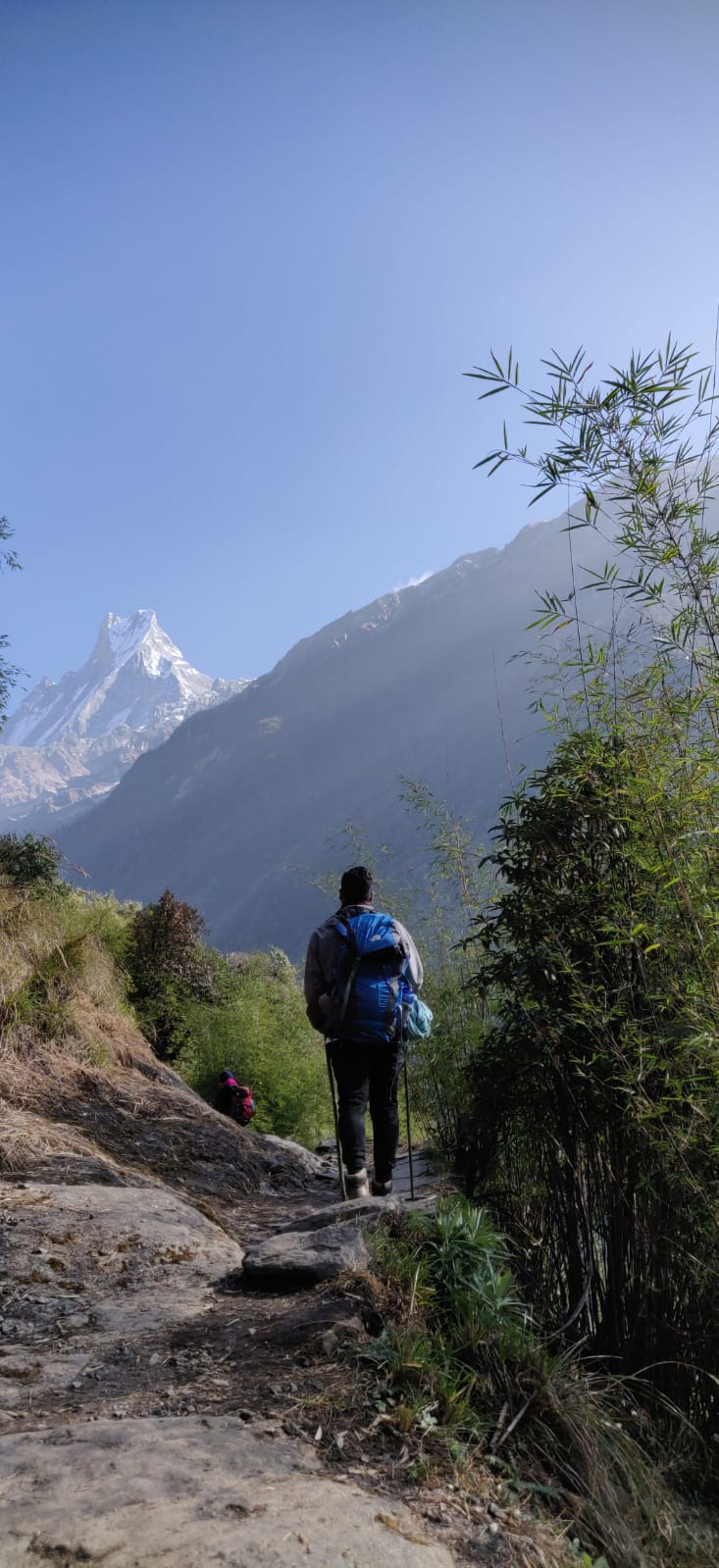
The next morning, the clouds cleared for a while, and we enjoyed a stunning view of Machhapuchhre (Fishtail) shining in the sunlight. That view made the slippery walk and wet clothes completely worth it.
After breakfast at 9 a.m., we descended by the same trail, carrying sweet memories in our hearts and wishing we could stay longer. After reaching Kande, we returned to our hotel in Pokhara, where we enjoyed our favorite dishes for lunch. Some students went swimming, while others went shopping around Lakeside with their teachers.
At 5 p.m., we had a delicious BBQ with momo, soft drinks, sandwiches, and sausages—the taste was unforgettable! We danced, sang, and took lots of photographs together. By 9 p.m., after dinner, we were so tired from the hike that we went to bed for a well-deserved rest.
The next morning, after breakfast, we began our journey back to Kathmandu, carrying unforgettable memories and the wish to return again someday.
This trip was not just about reaching Australian Camp—it was about teamwork, fun, and creating joyful memories. The students came back tired but excited, already asking, “Where are we going next?”
So, if you’re planning a trip to Australian Camp, don’t let the monsoon stop you—in fact, it might just make your adventure even more magical.